Saturday, February 15, 2014

Carpe Diem "Spiritual Ways" #2 Unconditional Love


Dear Haijin, visitors and travelers,

As you follow my other weblog Carpe Diem Haiku Kai than you maybe know that we are on a pilgrimage along the 88 temples on the Island of Shikoku. It's a pilgrimage who every Buddhist needs to make once in his/her lifetime. This pilgrimage inspired me to create this all new feature, because one of the 'classic rules' of haiku is that there has to be a deeper meaning in it, mostly based on Buddhism, but all other spiritual ways of other religions can also be in it on a deeper layer.
Here ... however ... I will try to stay close to my own philosophy which is based on more than one religion or spiritual vision.

Nara NaraYana

In this episode I love to share a bit of my philosophy with you all. This philosophy of my is very important in all that what I am doing e.g. in my work as an oncology nurse in a local hospital. My philosophy is:
 
First ... live out of unconditional love for all and everything on Earth
Second ... in everything and everyone there is God (or Spirit or what ever you call it yourself), which is based on the thought 'NaraNaraYana", a Hindu word which means something like "God in humankind, humankind in God".
And last but not least ... you have always look towards the other with respect and you have to accept that the other is different from you. In my work I always look at my patients with the thought "How would I like it if I was in that hospital bed?"

Unconditional Love

Well ... I hope this post inspires you to compose a 'spiritual' haiku. It inspired me to write the next haiku:

unconditional
love never makes exceptions -
the sun rises again


the sun rises again
every day without asking why
unconditional


(c) Chèvrefeuille

Not a strong set I think, but I think the message has become clear ... is it a spiritual one? Yes it is ... Now it's up to you ...

This episode is NOW OPEN for your submissions and will remain open until March 2nd 11.59 AM (CET).


Friday, February 14, 2014

Carpe Diem's "Only the First Line" #4


Dear Haijin, visitors and travelers,

Another nice episode of this Carpe Diem Haiku Kai Special "Only The First Line", in which the goal is to write a new haiku which starts with the first line I give. I have searched for a new "First Line" and came up with this one:

Ice Flowers

"blooming ice flowers"

So the goal of this episode is to write a new haiku starting with the line given "blooming Ice Flowers" not an easy task, but ... well it's a challenge and a challenge is not always easy (smiles). And to make this somewhat more like a challenge you have to write your haiku in the classical 5-7-5 syllables way.

Of course I have tried it myself. Here is my attempt to write a haiku starting with the line "blooming Ice Flowers".

blooming ice flowers
painted in this stone cold night
on bedroom window


(c) Chèvrefeuille

This episode of "Only the First Line" is NOW OPEN for your submissions and will remain open until February 22th 11.59 AM (CET).
Have fun, be inspired and share your haiku with us all here at our Carpe Diem Haiku Kai Special.

Wednesday, February 5, 2014

Carpe Diem's "Use that Quote" #3, Mahatma Gandhi


Dear Haijin, visitors and travelers,

Another episode of "Use That Quote" in which the goal is to write a haiku, senryu, tanka or kyoka inspired on the given quote.
For this episode I have chosen for a wonderful quote by one of my heroes ... Mahatma Gandhi who fought against the oppression of the United Kingdom with his non-violence policy. As I saw the movie "Gandhi" I was inspired and I wrote an essay with his ideas as base about the oppression of our homosexual neighbours and the growing intolerance against them here in The Netherlands.

The quote for this episode is:

[...] "You can chain me, you can torture me, you can even destroy this body, but you will never imprison my mind" [...] – Mahatma Gandhi


Mahatma Gandhi

It will not be an easy task I think, because in this quote there is no real nature, but ... well have to try it. You don't have to use the text as it is given, you can use it for inspiration and that's what I tried when I wrote this haiku:

like a chain of iron
the Wisteria climbs against the wall
reaching for the sky


reaching for the sky
the silver birches in my garden
without leaves

without leaves
a tree looks very much alive
following his own path


I hope you understand the inspiration which I took from the quote ... I think this is a nice trio of haiku, but that's not up to me to say ...
This episode of "Use That Quote" is NOW OPEN for your submissions and will remain open until February 19th 11.59 AM (CET). Have fun ....


Monday, January 27, 2014

Carpe Diem's "only the first line" #3


Dear Haijin, visitors and travelers,

I have another "only the first line" episode for you to work with. The goal of this feature is to write an all new haiku which starts with the given first line. It's a nice feature and it challenges you to think 'out of the box', because this feature doesn't work with one of the classic rules namely ... an experienced moment as short as the sound of a pebble thrown into water.

This week's haiku has to start with the following first line:

a shooting star

Ah ... an easy one I think, but ... we will see ... here is my attempt to write a new haiku starting with this first line:

a shooting star
cuts through the dark moonless night -
wish you were here


(c)Chèvrefeuille
Shooting Star

Now it's up to you to write a haiku starting with the given first line ... have fun, be inspired and share. This episode of Carpe Diem's "only the first line" is now open for your submissions and will remain open until February 3rd 11.59 AM (CET).


Wednesday, January 22, 2014

Carpe Diem's "Use That Quote"


Dear Haijin, visitors and travelers,

I present to you our second episode of Carpe Diem's "Use that Quote" in which the goal is to write a haiku, senryu, tanka or kyoka inspired on a given quote. Today I have chosen a quote by Khalil Gibran a Lebanese writer and poet, but also a philosopher. He wrote a lot of novels about spirituality. Our quote from today's episode of Carpe Diem's "Use That Quote" is from his novel "The Prophet".
 
Selfportrait Khalil Gibran
I have read almost all his novels and I love his work a lot. He is the reason, why I once started to read Paulo Coelho's novels. Paulo's latest novel "Manuscript found in Accra" looks very similar with the novels of Khalil Gibran ... maybe they are related in mind.

Here is the quote for this episode:

"forget not that the Earth delights to feel your bare feet and the winds long to play with your hair"

And now it's the goal to use this quote for your inspiration to write a haiku, senryu, tanka or kyoka. I know that will not be easy, because I had some difficulties myself to write a haiku with this quote for inspiration, but I think I have succeeded. Here is my haiku inspired on the quote by Khalil Gibran.

with bare feet
dancing on Mother Earth's grounds
wind plays with my hair

(c) Chèvrefeuille

This episode of "Use That Quote" will stay on until February 6th 11.59 AM (CET) and I will try to post on that same day a new episode. For now have fun, be inspired and share your haiku with us all here at Carpe Diem Haiku Kai Special.


Tuesday, January 21, 2014

Carpe Diem's "Japanese Garden"


Dear Haijin, visitors and travelers,

I love to introduce an all new feature here at Carpe Diem Haiku Kai Special and I think this new feature will give you all a joyful challenge.
This new feature, this new challenge, goes back to the roots of haiku and challenges you to go back to basic. It's very similar to our other special feature "Goes Back to Its Roots". The title of this new feature is referring to the classic rules of haiku, but in this new feature not all those classic rules have to be used, just a few of them.

Which rules you have to use here?

1. 5-7-5 syllables
2. A moment as short as the sound of a pebble thrown into water
3. A kigo
4. A deeper, spiritual meaning
5. And last, but not least, it must have a nature image

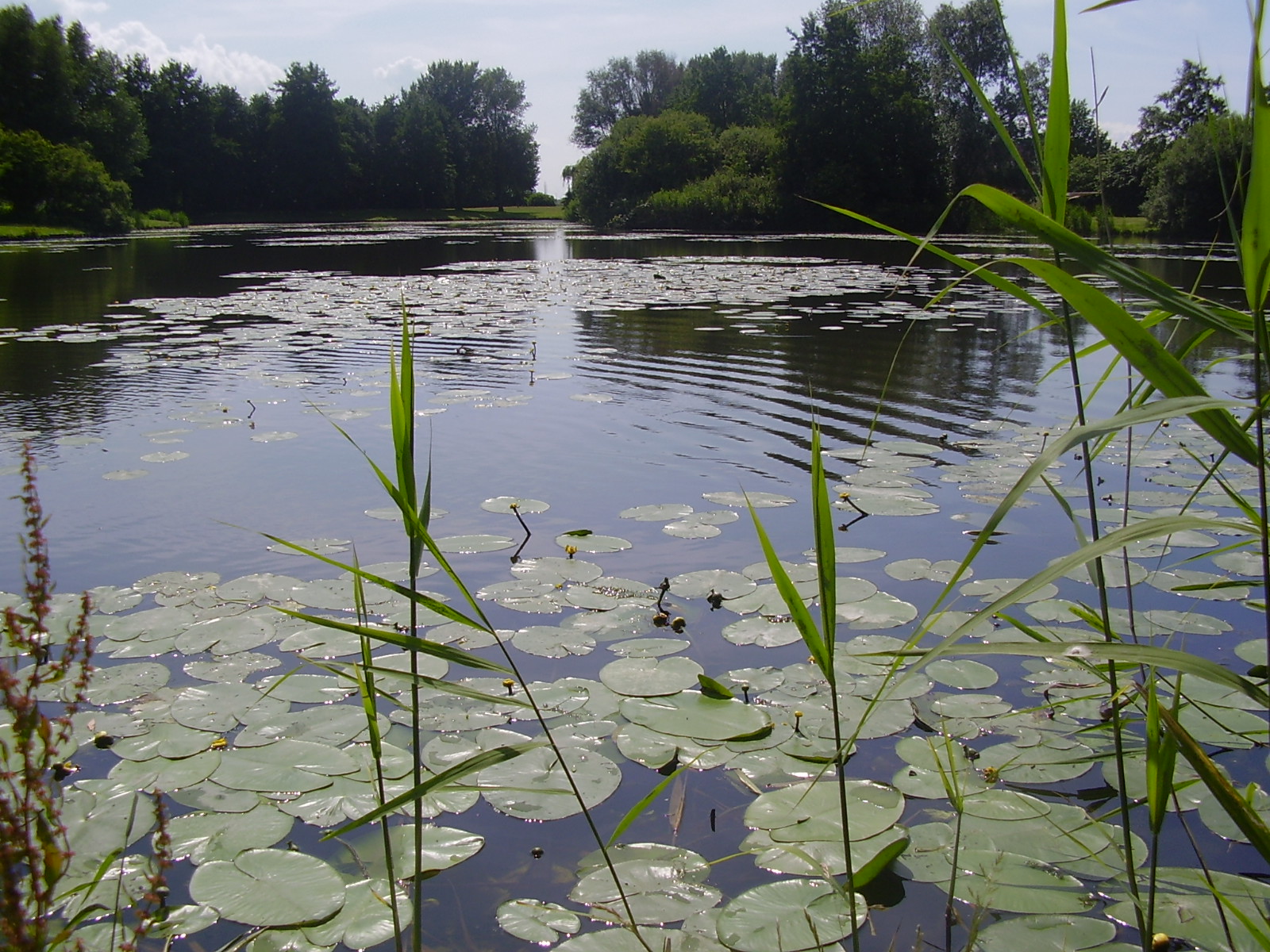
Almost the same as in our "Goes Back to Its Roots", but for all a little bit different I think. As the title already says ... it has to be something which can be seen in your garden, but in this case garden can be seen a bit broader, because you also may use an image from a park in your neighborhood or e.g. a park such as Yellowstone Park.


Let me give it a try with the above photo which I took in the city-park just around the corner in my hometown. This park is ... an oasis in a busy part of my hometown. As I walk here I don't even feel that I am in the city. In spring this park is a peaceful place and in winter, as the pond is frozen, it's a joyful place to skate and meet other people from my neighborhood. In summer you can even swim here. And of course in autumn it's the place to be to search for chestnuts and colorful leaves. 

Here is my attempt to write a classical haiku inspired on the city-park just around the corner.

heart of the neighborhood
in every season of the year
the place to contemplate

A beauty I can say, how immodest, but it's what I feel as I read this haiku again and again. It's a strong one and I think it's in touch with the goal of this new feature. What do you think?

Well ... I hope you like this new feature and I hope it will become a feature that is loved by you all. It's up to you now to take up this new challenge and share your thoughts with us all here at Carpe Diem Haiku Kai Special. Have fun, be inspired and share.

This episode of CD "Japanese Garden" will stay open until January 28th 11.59 AM (CET) and I will try to publish a new episode of "Japanese Garden" later on that same day. !! This episode is now open for your submissions !!


Sunday, January 19, 2014

Carpe Diem's "Little Ones" #9, American Sentence (also 17 syllables)


Dear Haijin, visitors and travelers,

I am a bit late with this new episode of our Little Ones feature, the feature in which I challenge you to think "out of the haiku-box" by writing other short poems as for example 'cinquain', 'villanelle' or 'tanka'.
This episode is inspired on the posts by Bjorn Rudberg of Bjorn Rudberg's Writings for this month's Carpe Diem in which we are on a journey straight through the (former) Soviet Union. He writes an every day haibun followed by a so called "American Sentence". I had never heard about that poetry form, but as I read the first posts by Bjorn ... I started to like those "American Sentences" ... that's the reason why I have chosen for this theme for this episode of our special feature "Little Ones".


Let me tell you something more about this so called "American Sentences".
Bjorn Rudberg recently introduced me to American Sentences, a poetic form developed by Allen Ginsberg in the mid-1980′s as a response to the haiku.  If haiku involved seventeen syllables down the page, he reasoned, American Sentences would be seventeen syllables across the page–an attempt to more accurately “Americanize” a form that had previously translated only roughly across the Pacific into the context of American poetry.

Like (rough) English approximations of the haiku, American Sentences work closely with concision of line and sharpness of detail.  Unlike its literary predecessor, however, it is compressed into a single line of poetry and included a reference to a month and year (or alternatively, a location) rather than a season.
An few examples by Allen Ginsberg:
Four skinheads stand in the streetlight rain chatting under an umbrella.
Or this one:
Put my tie on in a taxi, short of breath, rushing to meditate

And what to think of this example written by Bjorn Rudberg for the Irkutsk prompt at our Carpe Diem Haiku Kai weblog:
The wonders of a city threatens, as its viewed from a compartment
I think this isn't an easy poetry form, but they say "if you can write haiku, than you can write an American Sentence too". Well ... we will see ...

 
Here is my attempt, I have chosen to use a old haiku of myself to write this first American Sentence ever.
This the haiku which I used:

such a hot day
my shadow needs  to cool down
under the willow
I 'revised' this one into a American Sentence by changing it a little bit:
Such a bloody hot day, my shadow needs to cool down under the willow
This isn't a great one I know, but I am looking forward to your inspired American Sentence. I think this is a poetry-form which will not become my 'cup-of-tea', but ... you never know ...
This episode of Carpe Diem's "Little Ones", is NOW OPEN for your submissions and will stay open until February 3th 11.59 AM (CET) and I will try to post our new episode of "Little Ones" that same day.